Hi, I’m new here (yay) and making my first module (yippee), the CEM3340 VCO, the link to buy the Jack Sockets leads to a 6.3mm jack. Is there a specific reason for this or does a 3.5mm cable work as well?
If they are interchangeable, why would I choose the 6.3 over the 3.5 as I imagine the 6.3 cables can get pricey fast.
Hello and welcome to the forums! I would guess that 70% of the modules discussed in the forums will be intended to be built in the Kosmo format:
However, all of the protoboards projects or circuits you’ll find here can use whatever jack you’d prefer. We also have a few members who will build from PCBs (either from LMNC, from members of the board, or from public projects that should be discoverable in the wiki) meant for 6mm but use 3.5 mm jacks to be more compatible with other eurorack modules/systems. I believe those require use of more hand wired jacks against the existing footprints the 6mm jacks would have been soldered directly on to.
HI, I use 3.5 mini jacks with switches and I’m happy with the small footprint BUT!! Keep it mind that connecting cables in and out will eventually wear out the sockets or that something breaks. Then you can better use bigger ones or RCA’s, they are a bit sturdier.
I’ve been in your shoes before. My first module was also a 3340-based VCO and I also was having a hard time deciding which type of jacks to use. I did go for 6.3mm at first, but then when I started building my 2nd module (a clock generator with 10 output jacks) I realised that a system using 6.3mm would take up way too much space so I switched to 3.5mm
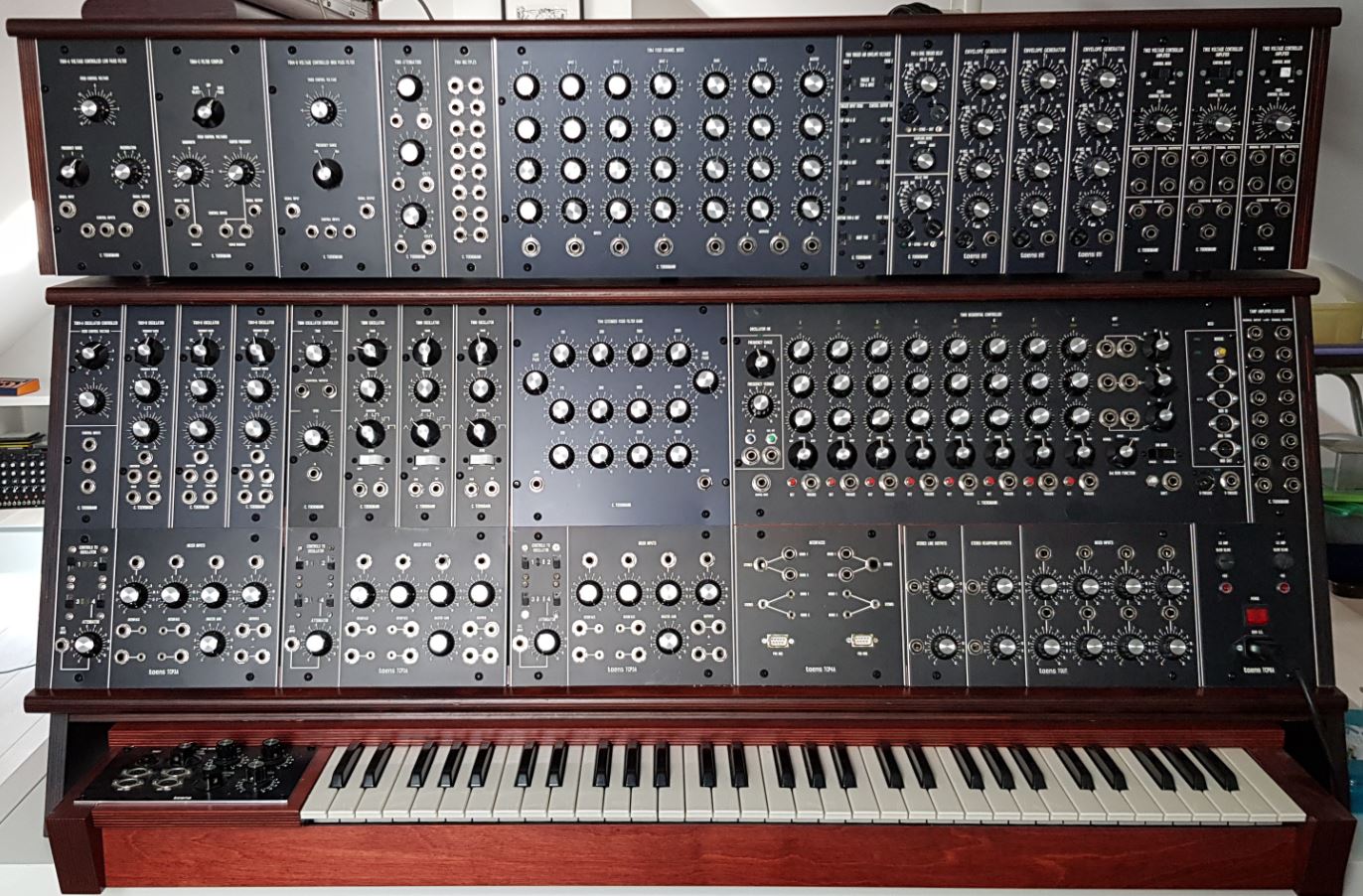
I am contemplating building a CP3A to replace a similar mixer in my work-in-progress modular and got some transistor replacements already. My question is how do you like it as a DC mixer? Did you change anything on the inputs? I read that the onset of clipping might be a little too soon and some people prefer to avoid that.
No, I did not change the inputs, as both Moog Modular mixers (CP3 and CP3A) are DC coupled already. They work fine as they are.
I recommend to stay DC coupled anyway as you can mix DC voltages or CVs as well, not only audio material. Then you must take care for potential DC offsets in your audio material on your own though.
Concerning clipping: A music producer who’s original CP3 I repaired demanded that explicitly.
If clipping starts too early for you the input material might be too strong and should be limited, or you just use other input resistors. But the overall amplification of the input stage must be adapted as well if you change resistor values and if you want to keep the overall amplification as it is.
But at the end you can configure everything as you like.