I was wondering if someone could tell me if this is the product that I need to buy in order to program the Mutable Instruments STM32 microcontrollers? If so, is this the ONLY piece of hardware I need or do I need an adapter of some sort in addition too this?
I’ve seen a couple of different repositories for the software. Does someone have a link to one they recommend and instructions maybe? I think, if I am understanding this correctly, that I first will need to install the bootloader first and then the firmware?
This is a dropbox folder I found that has both bootloader and firmware for each module. (Not sure how updated this software is)
And this is a repo I found:
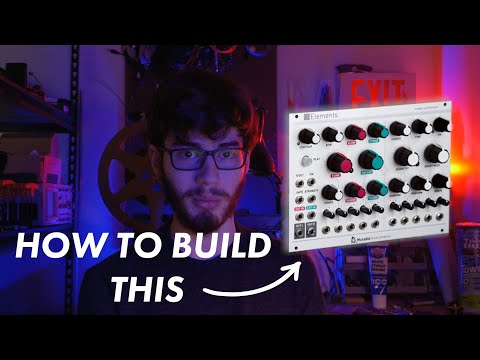
I found this YouTube video which should work? (Programming info starts at 12:01 in the video.)
Seems faster if you have prime, I ordered mine last week and it will be here thursday.
Hmm… maybe I got the last of the US stock, cuz if I ordered one today it wouldnt be til June lol
Ahhhh Elements. That’s actually next on my list after I finish the 3 that I have here. You will have to let me know how everything goes with it. The Yarns module was the first one I did and it literally took me about 20 hours of solid work putting the SMD components on. I was trying different methods to see which one(s) worked best for me so it took longer. I think that the other 2 modules will take less time. I’m waiting on a couple of through hole parts in order to finish it though and realized I needed to get this piece of hardware.
With that one that you linked to it doesn’t include the adapter board or JTag cable though, which I found you do also need.
I tried a few different methods that I had seen and of the 3 boards that I am building I chose to start with the one with the 0603 sized components first since they are larger than the components on the other boards.
What worked best for me in the end was putting a tiny amount of solder paste on the pads, then placing the component with tweezers making sure to press down so the component was completely touching the board, and then I would just place the tip of the soldering iron on the pad (not touching the component at all) and letting it do it’s thing so it would tack the component down. I would do the same to the other side and then go back to the first side and THEN heat the pad and leg of the component so the solder then covered the leg entirely. I’d go back to the other side and do the same.
If I tried to just heat the leg and pad and cover the one side with solder initially before tacking it down on each side I would get a huge mess with the component shifting, etc…
For the IC’s, especially the STM32 chip I put a small amount of solder paste on all 4 sides of the board where the chip goes. I didn’t even try to just get it on the pads. I just smeared a little on. I put the chip on with tweezers and then heated up each leg a bit. I ended up with a couple of solder bridges so to get rid of them I used a toothpick and put some flux paste on the chip and heated it up dragging across all of the legs. It got rid of the bridges for me.
I also bought a headlamp on Amazon, which I definitely needed. I can’t imagine doing SMD without it. Here’s the link for the one I got.
Solder Paste I used. Note that this paste melts at 250 degrees instead of 350 or more. This was a HUGE help!
Tweezers I used:
Now I just have to program it and see if I messed anything up Crossing my fingers that I have not.
Watch this guys video for sure btw.
He does attempt to explain some of the programming stuffs.
This is for Elements, but its in regards to the STM32 in general
One of the main things he explains early on in the video is building the hex file in Linux…
He mentions that often pre-compiled hex files fail and trying to compile it via Windows generally ends badly…
Regular solder melts at about 260°F, but you need a soldering iron temperature more like 350°F for reliable results. What realistically is the iron temperature needed for the paste?
For hand soldering with an iron, other than possibly lower temperature, is there any advantage to using solder paste? I’d never heard of using it for iron work.
This paste easily melts at 250°F. No problem. It has a higher metal to flux ratio than my regular solder.
@ChristianBloch is right about initially holding down the components with the paste. That was extremely helpful. I also could just heat the pad to melt the solder to tack the component down and could control the amount of solder I wanted to use far easier. Using paste also allowed me to populate the board very quickly. My first board took about 20 hours since I was trying different methods. I’m on my 2nd board now and was able to place about 1 component every 20 to 30 seconds with the paste.
I’ve actually found that I have more issues with some of the larger SMD components than the smaller ones. I thought it would be the opposite, but in reality, for me, it’s been easier to solder the smaller components on these boards. I couldn’t image doing it with regular solder and not the paste.
Of course, this is just my experience and what works best for me. Others may have found ways that work better for them.
But regular solder melts easily at 260°F. However I don’t know anyone who uses an iron at anywhere near that temperature for regular solder — you get cold joints. 350°F seems to be common.
Lol i was about to say, using a temp regulated iron that actually could reach these higher temps made all the difference. when i started nearly a decade ago i had some janky iron that probably didnt get over 300°F and i kept getting cold joints and couldnt solder properly. Kept burning the rosin cause i couldnt heat the components right.
Suddenly i get that Hakko FX888D and suddenly im an expert. (Ok, not an expert, but soldering never was an issue from then on).
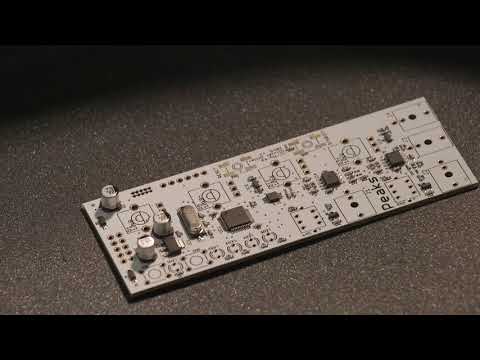
 Crossing my fingers that I have not.